
Market Resilience Meets New Uncertainty
Wholesale Values, Trade Policy & Demand Continue to Shape the End-of-Life Vehicle Market
As we move into the second half of 2026, the automotive marketplace continues its transition from the extraordinary conditions that followed the pandemic toward what appears to be the industry’s “new normal.” While wholesale vehicle prices stabilized compared to the volatility of recent years, persistent affordability challenges, elevated repair costs, evolving trade policy, and record vehicle age continue to reinforce one undeniable trend: Americans are keeping their vehicles longer than ever.
For the automotive recycling industry, this has created a unique combination of opportunities and challenges. Demand for recycled OEM parts remains exceptionally strong, yet the supply of total-loss and end-of-life vehicles continues to lag behind demand. These opposing forces have intensified competition throughout the salvage marketplace while reinforcing the long-term value proposition of automotive recycling.
In this Mid-Year 2026 edition of Wreckonomics™, we examine the economic forces shaping wholesale vehicle values, salvage supply, scrap markets, consumer ownership behavior, and what they mean for auto recyclers during the remainder of the year.

ARS Low Value Vehicle Index
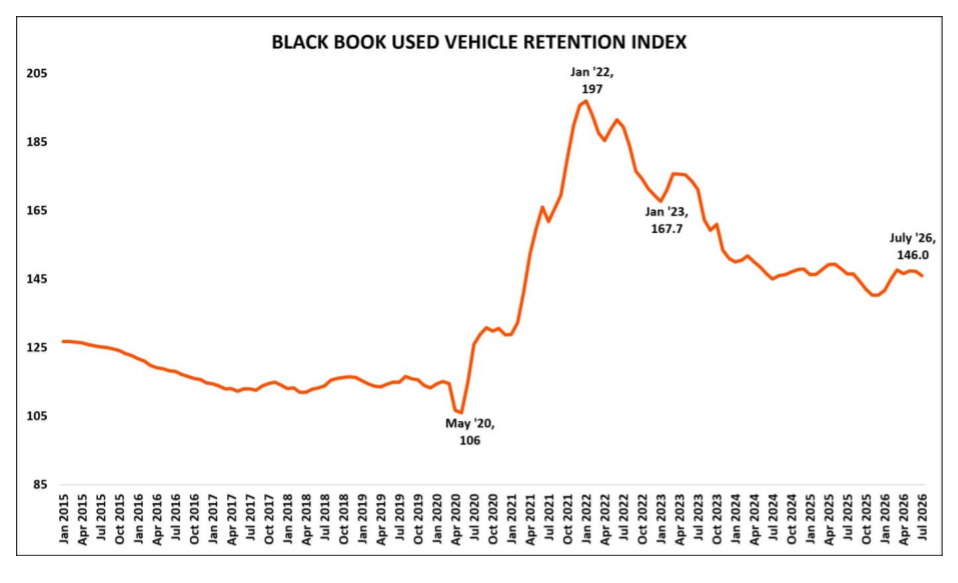
At Advanced Remarketing Services, our proprietary Low Value Vehicle Index continues tracking the segment often overlooked by national pricing reports—high-mileage, older-model, and end-of-life vehicles.
Through the first half of 2026, our observations suggest this segment has remained remarkably resilient despite broader economic uncertainty. Unlike higher-value vehicles, which respond more directly to interest rates and retail demand, low-value vehicles increasingly reflect replacement economics. Consumers are asking a different questions today than pre pandemic: “Can I afford another vehicle?” Instead of: “Should I replace this one?”
This subtle behavioral shift has become one of the strongest drivers of retention across the entire automotive fleet. Although low value vehicle values have not accelerated dramatically, depreciation at the lower end of the market has remained historically shallow, reinforcing demand for vehicles that can still provide inexpensive transportation.


Source: Advanced Remarketing Services*
Vehicle Retention Has Become Structural
Perhaps the most significant story of 2026 isn’t resurgent wholesale pricing—it’s vehicle retention. The average age of vehicles on American roads has reached another record high, and is now approaching 13 years. Americans are not simply delaying purchases because of temporary economic conditions—they are fundamentally changing ownership behavior.
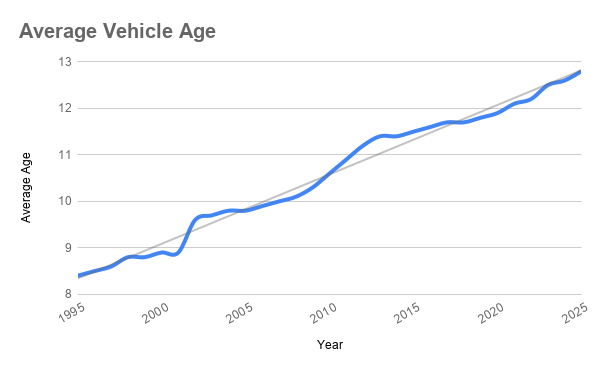

Several forces continue driving this trend:
- Higher monthly vehicle payments
- Elevated insurance premiums
- Expensive replacement parts
- Higher labor costs
- Longer repair cycles
- Higher registration and ownership costs
- Continued uncertainty regarding interest rates
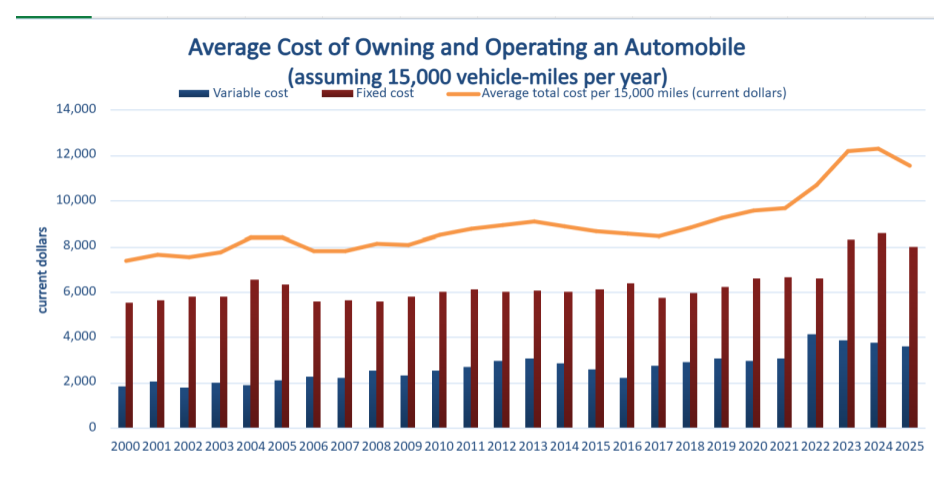
Collectively, these costs have significantly increased the total cost of ownership for replacement vehicles. So for many consumers it appears that keeping an aging vehicle on the road—despite rising maintenance costs—often remains the least expensive option available.

Repair Costs Continue to Favor Recycled Parts
Repairing vehicles has become dramatically more expensive which is powering recycled and remanufactured demand
OEM replacement parts continue experiencing pricing pressure, while many imported components remain affected by tariffs, shipping costs, and manufacturing adjustments. Add to that:
- Labor shortages continue affecting repair facilities.
- Collision repair complexity continues increasing.
- ADAS calibration requirements add cost to repairs.
- Insurance companies remain focused on controlling claim severity.
These conditions continue strengthening demand for recycled OEM components. Repair facilities are increasingly viewing recycled components not simply as lower-cost alternatives, but as necessary inventory for maintaining acceptable repair cycle times. For automotive recyclers, this represents one of the healthiest long-term demand environments the industry has experienced in decades.
Markets & Metals
A key driver for ELV values, we Review this segment price demand in our Wreckonomics Quarterly Market and Metals Series. While ferrous demand has remained consistent, 2026 has been defined by extreme unpredictable change in the rare metals and catalytic metal sectors.
The first half of 2026 has seen a terrific rise in values of the Platinum Group Metals (PGMs) the family of precious noble metallic elements – platinum, palladium, rhodium, ruthenium iridium and osmium – known for their exceptional catalytic properties, high melting points, and superior resistance to corrosion and wear. Because these metals are essential for emissions compliance, automotive manufacturers relied heavily on “secondary” (recycled) supply to bypass primary mining shortages. Recycled sources now supply approximately 35% of the global PGM market.
And though domestic steel production has shown periods of improvement, crushed automobile values have generally failed to experience the sustained appreciation many anticipated following expanded trade protections and these pockets of demand.
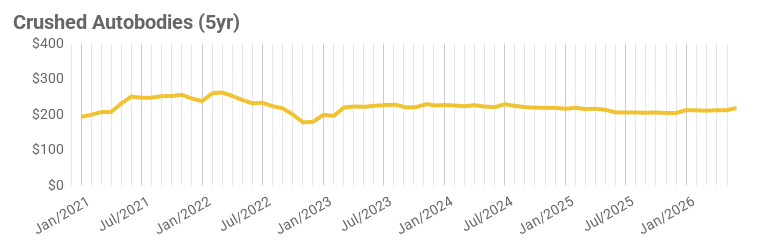

Source: Advanced Remarketing Services
Salvage Supply Remains Tight
Perhaps no issue has had a greater operational impact on recyclers than the continued shortage of salvage inventory. Despite millions of vehicles reaching advanced age, relatively fewer are entering the dismantling pipeline. In the past, higher repair costs would traditionally increase total losses. Instead, the explosion of replacement costs have encouraged insurers, repair facilities, and consumers to repair vehicles that previously might have been retired.
This has intensified competition among dismantlers, auctions, exporters, and parts suppliers seeking quality inventory. Acquisition costs remain elevated while demand for reusable components continues strengthening.
Artificial Intelligence Begins Transforming Remarketing
One of the most important developments of 2026 has been the acceleration of Artificial Intelligence across automotive remarketing. AI is rapidly improving:
- Vehicle identification
- VIN decoding
- Damage assessment
- Parts recognition
- Inventory pricing
- Buyer matching
- Auction optimization
- Customer service automation
For ARS, digital innovation has never been about replacing relationships—it has always been about creating more efficient marketplaces.
Platforms like mBid® continue demonstrating how intelligent technology can improve transparency, reduce transaction costs, and connect buyers and sellers more efficiently than traditional remarketing models.
As AI adoption accelerates throughout the industry, organizations that combine technology with marketplace expertise will be best positioned for long-term success.
Looking Ahead: The Second Half of 2026
While macroeconomic uncertainty remains, several long-term trends appear increasingly durable. We expect continued strength in:
- Recycled OEM parts demand
- Older vehicle retention
- Repair activity
- Demand for affordable transportation
- Digital remarketing platforms
- AI-assisted vehicle valuation
Potential headwinds include:
- Changes in trade policy
- Steel market volatility
- Interest rate movements
- Consumer confidence
- Insurance repair practices
Regardless of short-term market fluctuations, one fact remains unchanged: The U.S. vehicle fleet has never been older. Every additional year of vehicle retention increases the eventual supply of end-of-life vehicles while simultaneously increasing demand for affordable recycled parts. For automotive recyclers, that represents one of the strongest long-term fundamentals the industry has seen in decades.
At Advanced Remarketing Services, our focus remains unchanged.
We continue investing in technologies that create the industry’s most transparent and equitable marketplace for salvage and end-of-life vehicles. Unlike many competitors that have increased buyer fees as demand has grown, mBid® continues emphasizing lower transaction costs, broader buyer participation, and greater returns for sellers.
As the market evolves, our commitment remains simple: Deliver better outcomes for buyers, sellers, charities, insurers, and recycling partners while helping move the automotive recycling and remarketing industries forward.
About ARS
Advanced Remarketing Services (ARS) works closely with our clients to identify low value vehicles and end of life vehicles (ELV) units in their asset pool. Our focus on older high-mileage and negative equity units helps to reduce fees and deliver the highest possible returns..
If you have a pool of low value vehicles in your portfolio or if you’re looking at ways to maximize recoveries, please reach out to us at ARS. Send us an email: success@arscars.com
Follow the Wreckonomics blog:
https://www.arscars.com/category/wreckonomics/
And subscribe for updates!